
Best Weather for Inshore Fishing on the Gulf Coast
- Mike Schlitz
- Jul 13
- 6 min read

A sunny forecast can make for a beautiful boat ride, but it is not automatically the best weather for inshore fishing. Around Bay St. Louis and the Mississippi Gulf Coast, wind direction, water movement, cloud cover, and the timing of a front often matter more than a clear blue sky. The fish are still there in all kinds of conditions. The key is knowing where they are likely to move and choosing water that is safe and comfortable to fish.
For families, first-time anglers, and experienced fishermen alike, the sweet spot is usually manageable wind, moving water, and temperatures that match the season. A knowledgeable captain can adapt to changing conditions by moving from open bays to protected marshes, working shorelines, or adjusting the target species.
What Is the Best Weather for Inshore Fishing?
The best weather for inshore fishing is generally a stable weather pattern with light to moderate winds, moving tides, and safe water conditions. That does not mean every productive day looks the same. Redfish can feed hard under gray skies in shallow marsh water, while speckled trout may turn on when a gentle morning breeze pushes bait along a point or reef.
On the Mississippi Gulf Coast, wind is usually the biggest factor in deciding where and how comfortably you can fish. A light breeze can improve a bite by breaking up the surface, keeping fish less wary, and moving bait. Too much wind can muddy shallow water, create rough chop in open bays, and limit access to exposed areas.
A calm, clear day can be excellent, especially in cooler months when fish are holding in deeper holes or around structure. In warm weather, however, bright midday sun may push fish toward shade, deeper edges, or moving water. Early mornings and late afternoons become especially valuable then.
The Most Comfortable All-Around Conditions
For a relaxed inshore charter, many anglers hope for winds around 5 to 15 mph, a favorable tide, and no nearby thunderstorms. Those conditions usually allow a captain to cover productive water without spending the day fighting rough waves.
That said, fishing is rarely as simple as finding one perfect forecast. A steady 12 mph wind from a workable direction can fish better than a calm day immediately after a powerful cold front. Conditions need to be read together, not one number at a time.
Wind Direction Can Change the Plan
Wind affects water clarity, boat position, bait movement, and safety. In the bay and marsh, it can also determine which shoreline has cleaner water and which one has been stirred up.
A south or southeast breeze often brings warmer Gulf air and can help push water into the marsh. That can be useful for redfish cruising shallow ponds, drains, and grassy edges. A north wind commonly follows a cold front and can pull water out, exposing more shoreline and concentrating fish in deeper channels, bayous, and potholes.
Neither direction is automatically bad. Low-water conditions after a north wind can create excellent redfish opportunities when fish are forced into predictable travel routes. The trade-off is that shallow areas may become difficult to reach, so local knowledge matters.
Strong winds are another story. When the forecast calls for sustained high winds or gusty conditions, open-water trout fishing may be less practical. Protected marshes, coves, and lee shorelines can still offer a good bite, but safety always comes first. A private charter should feel exciting, not like a rough ride everyone is trying to endure.
Tides Matter as Much as the Forecast
Fish need water movement to feed comfortably. A moving tide carries bait, changes current around points and drains, and gives predators a reason to set up in ambush positions. For many inshore situations, the strongest bite happens during the first part of an incoming or outgoing tide rather than at dead high or dead low water.
An incoming tide can bring cleaner water and baitfish farther into marsh areas. Redfish may push shallow to feed along grass lines, oyster edges, and flooded shorelines. Speckled trout often position near current breaks, deeper edges, and points where bait gets swept past.
An outgoing tide can be just as productive. As water drains from the marsh, shrimp, crabs, and baitfish funnel through cuts and bayous. Redfish and flounder frequently take advantage of these pinch points. A falling tide can also reveal structure and help anglers identify where fish are likely to hold as water levels change.
The best tide depends on the location, species, water level, and season. That is why a captain does more than watch the weather app. Reading the tide against the actual conditions on the water is where the day comes together.
How Cold Fronts Affect Gulf Coast Inshore Fishing
Cold fronts are part of fishing the Mississippi coast, especially from fall through early spring. They can change the bite quickly, but they do not mean you should write off a fishing trip.
Before a front arrives, falling pressure and increasing wind can trigger aggressive feeding. Fish sense a weather change and may feed heavily while bait is active. These can be exciting days, although rising winds and approaching storms require careful planning.
Immediately after a strong front, bluebird skies and cooler temperatures can make fish more selective. Speckled trout may move deeper and slow down. Redfish often remain catchable, particularly in protected marshes, deeper drains, and sun-warmed areas later in the day. Slowing the presentation and fishing the right depth can make a big difference.
After a few stable days, fish often settle back into a more predictable pattern. This is one reason stable weather is valuable: it gives fish time to establish a routine, and that makes them easier to locate.
Clouds, Rain, and Water Clarity
Cloud cover is often an advantage for inshore fishing. Overcast skies reduce glare and can keep fish feeding longer in shallow water. Redfish may stay on flats later into the morning, while trout can remain more active outside of low-light hours.
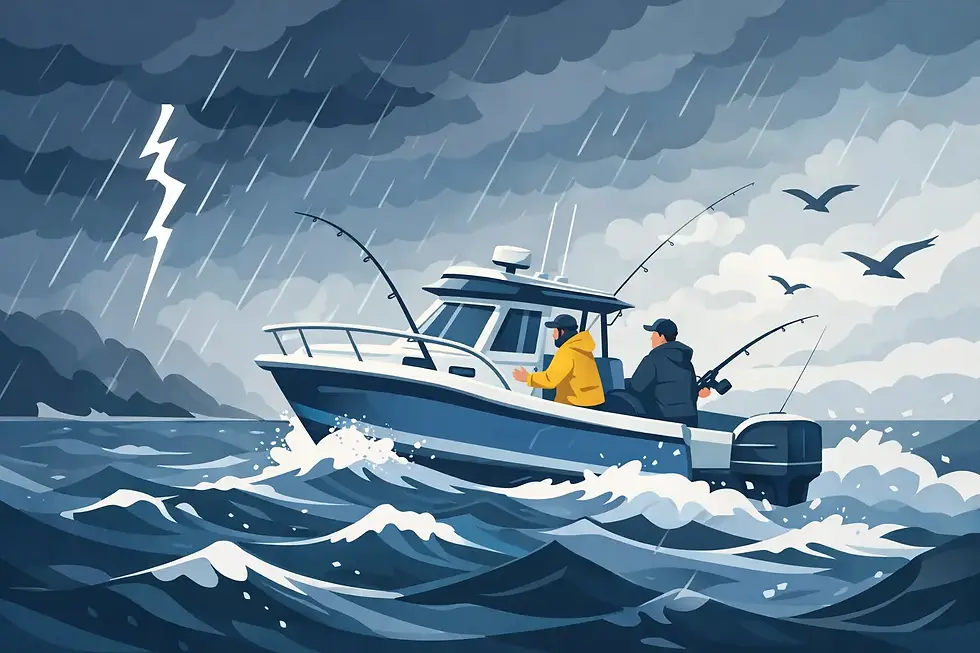
Light rain is not necessarily a problem, particularly in warm weather. It may even keep the day cooler and reduce boat traffic. Heavy rain, lightning, and thunderstorms are different. Lightning is a no-go on the water, and hard rain can quickly affect visibility, water clarity, and comfort.
Freshwater runoff after prolonged rain can also alter fishing patterns. Salinity drops in some areas, and muddy water can spread through the bay. Redfish are generally adaptable and can still be found in stained water. Speckled trout may shift toward cleaner, saltier water. Flounder often hold along edges where water conditions change.
Seasonal Weather and Your Target Species
Inshore fishing happens year-round, but the most productive weather patterns shift with the seasons.
Spring
Spring brings warming water, active bait, and changing conditions. Redfish are often available in marshes and along shorelines, while trout fishing improves as water temperatures rise. Wind can be inconsistent, so protected options are valuable. Mild mornings and moving tides are hard to beat.
Summer
Summer offers long days and plenty of action, but heat and afternoon storms are part of the deal. Early trips are popular because fish often feed best before the sun gets high and temperatures climb. Later in the day, deeper water, shade, and moving tide become more important. Keep an eye on thunderstorm forecasts.
Fall
Many local anglers love fall because cooler air, active bait, and more comfortable temperatures can create excellent fishing. Redfish may be feeding aggressively, and trout can be dependable around deeper edges and moving water. Fronts become more frequent, so flexibility is useful.
Winter
Winter fishing can be very productive when you match the approach to cooler water. Redfish often gather in protected areas, while trout may hold deeper and feed during warmer parts of the day. Stable periods after a front can be especially worthwhile. Dress in layers, because a chilly boat ride can turn comfortable once the sun comes up.
When Weather Is Not Worth Pushing
A little wind, cold, or rain should not stop a good fishing day. Unsafe conditions should. A responsible captain watches the forecast before departure and monitors it throughout the trip. Conditions that may require postponing, delaying, or changing the plan include:
Thunderstorms or lightning in the area
Sustained high winds or dangerous gusts
Rough water that makes travel unsafe or uncomfortable
Dense fog that limits safe visibility
The goal is not simply to get the boat off the dock. It is to give guests a safe, enjoyable opportunity to catch fish and learn the water.
Let the Conditions Guide the Trip
The forecast is a starting point, not a guarantee. A cloudy morning with a falling tide may be the right setup for redfish in a marsh drain. A calm winter afternoon might call for working deeper water for trout. A windy day may lead to protected shorelines where fish are feeding out of the chop.
That is the advantage of fishing with a local guide. At Holy Schlitz Fishing Charters, the plan is built around the weather, tide, season, and the kind of day your group wants to have. Bring weather-appropriate clothing, sunglasses, sunscreen, and a good attitude. Let the captain handle the bait, gear, licenses, and on-the-water adjustments while you focus on the next strike.


Comments