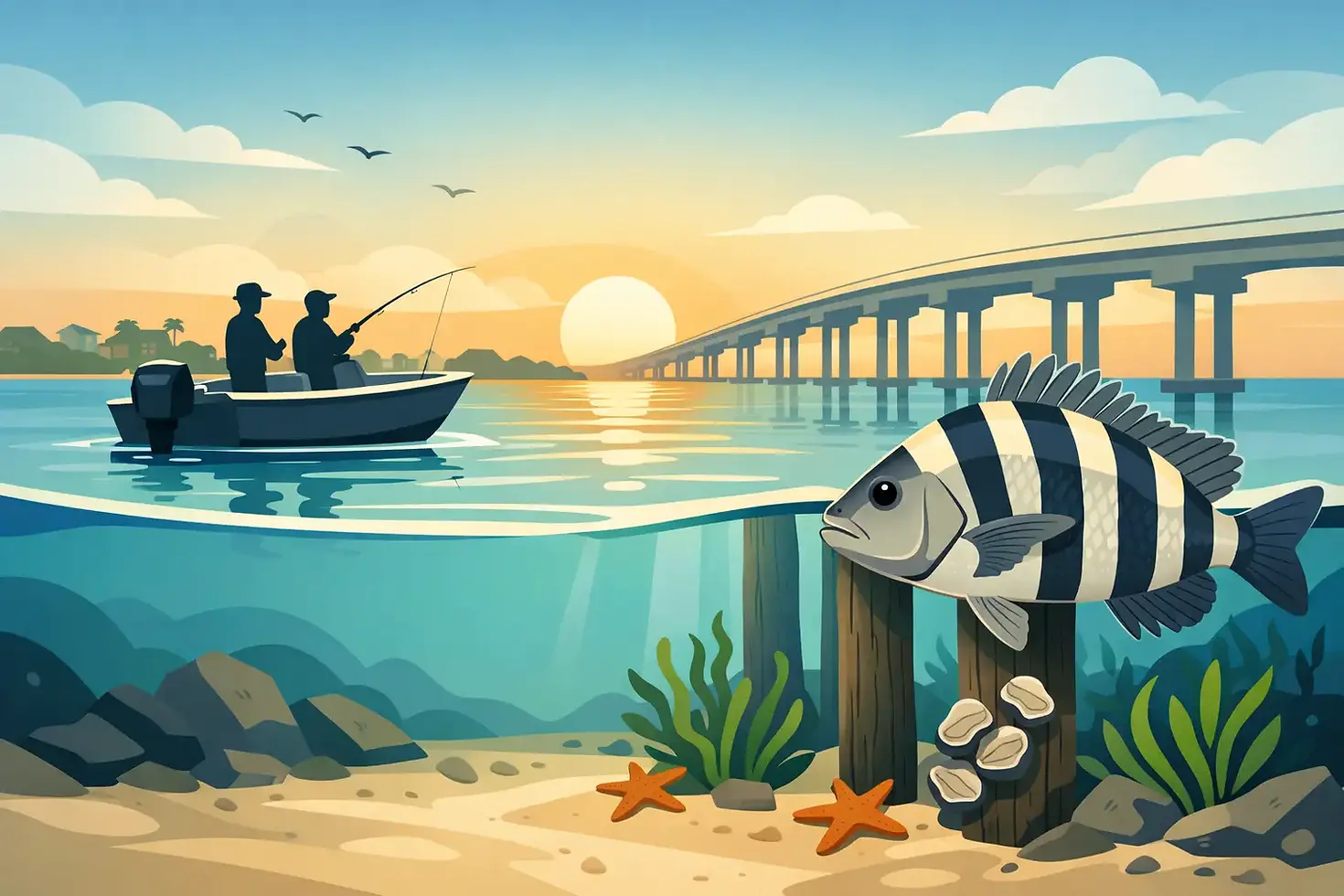
A Sheepshead Trip Example for Bay St. Louis

Sheepshead fishing is not usually about running wide open until somebody spots birds. It is a close-range game around barnacle-covered structure, where a small tap can turn into a hard pull and a fish with human-like teeth is waiting to steal your bait. This sheepshead trip example shows what a typical guided morning in the Bay St. Louis area can look like, from the first cast to the ride back to the dock.
A trip like this works well for first-timers, families, couples, and experienced anglers who want to spend their day around productive inshore structure instead of guessing where to start. Sheepshead are strong, great on the table, and especially fun because every bite asks you to pay attention.
A Sheepshead Trip Example: The Morning Plan
Picture a cool late-winter or early-spring morning on the Mississippi Gulf Coast. The group meets the captain at the dock with layered clothing, sunglasses, sunscreen, and a small cooler for fish. The boat, bait, rods, tackle, water, and fishing licenses are already handled, so nobody needs to spend the first hour figuring out gear or stopping at a bait shop.
Before leaving, the captain checks the conditions one more time. Wind direction, tide movement, water clarity, and recent weather all affect where sheepshead set up and how comfortably the boat can fish. On a calm day, the first stop may be a set of pilings, a dock line, or another hard structure holding barnacles and small crabs. If the wind is up, a more protected bay or marsh-side location may make better sense.
The ride out is part of the experience. Bay St. Louis waters can shift quickly from open bay views to quiet shorelines and working structures where baitfish, birds, and current all tell part of the story. A good captain is not just driving to a saved spot. He is reading what the water is doing that day.
Getting Set Up Around Structure
Once the boat is positioned, the pace changes. Sheepshead often live tight to the same places that make casting tricky: pilings, seawalls, bridge supports, rocks, docks, and other crustacean-covered structure. The goal is to place a bait close enough to tempt a fish without immediately hanging up.
A typical setup is simple and effective: a light spinning rod, a leader suited to the structure, a small hook, and enough weight to keep the bait where the fish are feeding. Shrimp is a dependable option, and crabs can be excellent when available. The best bait depends on local conditions and what the fish have been feeding on, so the captain may adjust as the morning develops.
For beginners, the first lesson is usually about feel rather than distance. Sheepshead do not always slam a bait. Sometimes the line twitches, goes slack, or gives a quick peck that disappears if an angler waits too long. The captain can show each person how to hold the rod, watch the line, and set the hook with a short, controlled motion.
That hands-on help matters. A group may miss several early bites, then suddenly start connecting once everyone recognizes the difference between a nibble and a fish moving off with the bait.
The First Good Fish
A sheepshead bite can feel surprisingly light at first. Then the fish realizes it is hooked and makes a determined run for the structure. That is when an angler needs to keep steady pressure and avoid giving the fish a chance to wrap the line around a piling.
The first fish over the rail is usually a crowd-pleaser. Black-and-silver vertical bars, a broad body, and those unmistakable teeth make sheepshead one of the Gulf Coast's most recognizable catches. The captain measures the fish, confirms it meets current regulations, and explains safe handling before placing a keeper in the cooler or releasing it carefully.
Not every fish will be a keeper, and not every stop will produce the same way. That is normal. Productive sheepshead fishing often means catching a mix of sizes, moving when the bite slows, and making the most of a tide window instead of forcing one location all day.
What the Rest of the Trip Can Look Like
After a productive first stop, the captain may make a short move to fresh structure. This is where a private charter has a real advantage. If one person wants more instruction, another wants to target a larger fish, or the group simply needs a change of scenery, the plan can adapt without trying to fit into a crowded party-boat schedule.
A half-day charter is often enough time to learn the basics, fish several locations, and put together a memorable catch. It is a strong choice for families with younger anglers or visitors who want time for other Gulf Coast plans. A full-day trip gives the captain more flexibility to follow changing tides, spend longer on a hot bite, or mix in other inshore opportunities if conditions allow.
Sheepshead are the main target on this kind of trip, but Gulf Coast fishing does not always follow a script. Depending on the season and location, redfish, black drum, trout, or other inshore species may show up. The captain will keep the trip focused, but a surprise fish is part of what makes a day on the water memorable.
There is also some waiting between bites. That is not wasted time. It is a chance to look at the water, talk through what the current is doing, take photos, and enjoy being outside. Kids often stay engaged when they have a job, whether that means watching a rod tip, helping spot a bird, or holding the landing net when the time is right.
What Guests Need to Bring
A guided sheepshead trip should feel simple, but a little preparation makes the day more comfortable. Wear shoes with good grip, especially if the deck may get wet. Bring weather-appropriate layers, a hat, sunglasses, sunscreen, and any snacks or drinks beyond the water provided. A small personal cooler is useful if you plan to take fish home after the trip.
Avoid bringing a large tackle box unless you have a specific reason. The captain supplies gear selected for the current bite, and too much extra equipment can take up valuable room on the boat. If you have a favorite rod or a child who is more comfortable using a familiar setup, ask ahead of time whether it makes sense to bring it.
Motion sickness is another practical consideration. If anyone in the group is prone to it, prepare before the trip according to the product directions or guidance from a medical professional. Inshore runs are generally more protected than offshore travel, but wind and chop can still affect comfort.
Timing Matters More Than a Perfect Date
Sheepshead fishing is commonly associated with the cooler months, when fish gather around structure for seasonal spawning activity. That can create excellent opportunities, but no captain can honestly promise a limit of fish just because the calendar says it is sheepshead season.
The better question is whether conditions line up. A moving tide often helps, although the exact direction and strength that fish best can vary by location. Heavy rain can change water conditions. Strong wind can limit which areas are safe and comfortable to fish. A cold front may make fish feed differently from one day to the next.
That is why local knowledge matters. On a charter, the plan is built around the conditions you have, not the conditions you hoped for when you booked weeks earlier. Safety comes first, followed by putting the group in the best available position to catch fish.
Why This Trip Fits So Many Groups
Sheepshead trips reward patience, but they are not overly complicated. A beginner can learn the basics quickly, while an experienced angler can enjoy the technical side of presenting a bait close to structure and detecting subtle bites. The fish fight hard enough to feel earned, and they make a fine meal when properly cleaned and prepared.
For a private group, the real value is the shared experience. One person lands the first keeper. Somebody else loses a big fish at the boat. A child catches a surprise black drum. By the end of the morning, the group has stories, photos, and hopefully a cooler with a few fresh fillets.
With Holy Schlitz Fishing Charters, Captain Mike handles the boat, bait, equipment, licenses, and the local details that can make the difference between fishing around structure and fishing it effectively. Guests can focus on the fun part: learning the bite, setting the hook, and seeing what comes up from the pilings.
If a sheepshead trip sounds like your kind of morning, come ready for subtle bites, a little friendly competition, and the possibility that the smallest tap of the day turns into the fish everybody talks about on the ride home.


Comments