
A Real Guide to Charter Fishing
- Mike Schlitz
- May 30
- 6 min read

Booking a fishing trip should feel exciting, not confusing. If you have been looking for a guide to charter fishing because you want a fun day on the water without guessing what to bring, what is included, or whether the trip fits your group, you are in the right place.
A good charter takes the pressure off. You do not need your own boat, a tackle stash, or years of saltwater experience. You need a clear plan, the right captain, and a trip that matches what you actually want out of the day. For some people, that means kids catching their first fish in calm water. For others, it means working marsh edges for redfish or chasing a cooler of speckled trout.
What a charter fishing trip really includes
At its core, charter fishing is simple. You are hiring a captain with the boat, local knowledge, gear, and experience to put you in position to catch fish safely and efficiently. That sounds straightforward, but not every trip is set up the same way.
Some charters are bare-bones and assume you already know your way around rods, bait, and fish handling. Others are built to be easy for beginners and families, with licenses, tackle, bait, and basic trip essentials handled for you. If you are new to booking, that difference matters more than people think.
For an inshore charter along the Mississippi Gulf Coast, the usual target species are fish people actually get excited about catching and eating - redfish, speckled trout, flounder, and sheepshead. These trips usually run in bays, marsh drains, grass edges, oyster areas, and protected coastal waters rather than heading far offshore. That often means a more manageable ride, quicker access to fishing spots, and a better fit for mixed-skill groups.
A practical guide to charter fishing for first-timers
The biggest mistake first-time customers make is booking by price alone. Cost matters, of course, but it should be weighed against what is included, how long the trip runs, who the trip is built for, and what kind of fishing you want to do.
A half-day trip is often the best place to start. It gives you enough time to fish hard, learn the rhythm of the day, and still keep things comfortable for kids, beginners, or anyone testing their sea legs. A full-day trip makes sense if your group wants more time to move between patterns, target multiple species, or simply maximize your shot at a strong bite. A sunset trip can be a great option if your goal is a relaxed evening on the water with a chance at action during cooler, lower-light conditions.
That is where expectations matter. If your group wants nonstop rod-bending action, the captain may steer the day toward species and locations that produce steady bites. If you are focused on one fish in particular, like slot redfish, the approach may be more patient and more specialized. Neither choice is wrong. They are just different trips.
How to choose the right charter
Start with the captain. You want someone licensed, insured, and clear about how the trip works. That is not sales fluff. It is part of making sure the day is safe, organized, and worth your money.
Next, look at how the trip is packaged. Clear trip lengths, clear pricing, and clear details about what is included usually signal a business that respects your time. If the information feels vague before you book, it may feel just as vague when you show up at the dock.
It also helps to ask whether the charter is private. For many families, couples, and small groups, a private trip is the best fit because the pace stays centered on your group. You are not trying to match strangers' expectations, skill levels, or personalities. If one person wants a little more coaching and another wants to cast all morning without much instruction, a private charter can usually handle both.
If you are booking on the Mississippi Gulf Coast, choosing an inshore guide with strong local knowledge is especially valuable. Marsh systems, tides, bait movement, and seasonal fish patterns can shift fast. A captain who fishes those waters regularly has a better read on where to start and when to adjust.
What to expect before you leave the dock
A reliable charter should make the prep side easy. In many cases, the essentials are already covered - rods, reels, tackle, bait, and fishing licenses. Water is commonly included too, though it is smart to confirm. Some trips also offer fish cleaning, which is a nice bonus if you plan to bring home dinner.
What should you bring? Keep it simple. Wear weather-appropriate clothing, soft-soled shoes, sunglasses, sunscreen, and a hat. A light rain layer is not a bad idea, especially in warmer months when coastal weather can change quickly. If you are prone to motion sickness, take care of that before the trip starts, not after the boat leaves the launch.
You also want to listen to the captain's arrival instructions. Showing up on time matters. Fishing windows can tighten around tides, bait movement, heat, and wind. A late start can cost you more than a few minutes.
Weather, seasons, and the truth about fishing conditions
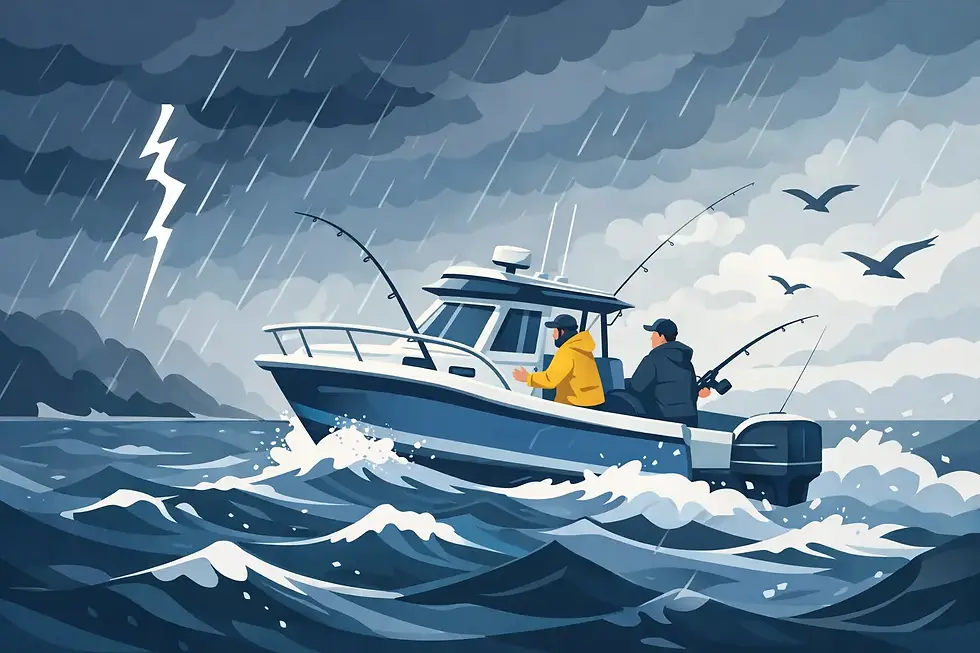
Every honest guide to charter fishing should say this plainly: fish do not read your calendar, and weather does not care that you booked vacation dates months ago.
That does not mean your trip is a coin flip. It means fishing always has variables. Wind direction, water clarity, tide movement, recent rainfall, and seasonal changes all influence what the day looks like. A good captain adjusts. Sometimes that means switching spots. Sometimes it means changing bait or slowing the presentation. Sometimes it means shifting from one target species to another because that gives your group the best chance at a productive trip.
This is one of the biggest advantages of hiring a guide. You are not spending half the day trying to figure out where to start. You are stepping onto a boat with a plan.
Along the Gulf Coast, seasonal variety is part of the fun. Warmer months can mean active trout and strong redfish opportunities, while cooler periods may offer their own patterns and species options. There is no single perfect month for everyone. The better question is what kind of trip you want.
Who charter fishing is best for
A well-run inshore charter works for more people than most first-timers expect. Families like it because the setup is manageable and hands-on without being overly technical. Couples like it because it is active, relaxed, and a lot more memorable than another routine outing. Friend groups like it because there is enough action and movement to keep the day lively. Experienced anglers like it because local insight still matters, even if they know how to fish.
The key is matching the trip to the group. Young kids may do better on a shorter trip with steady action. Serious anglers may want more time and a species-focused plan. Beginners usually benefit from a captain who enjoys teaching, not just running the boat.
That customer-first setup is a big reason private inshore trips stay popular. A good captain can help a new angler land a first fish, then turn around and coach a more experienced guest through a better presentation along the next shoreline.
The best questions to ask before you book
You do not need to overcomplicate the booking process, but a few questions can save you trouble. Ask what is included, what species are likely that time of year, how many people the trip is best for, what you should bring, and what happens if weather becomes an issue.
You should also ask how the trip is designed. Is it family-friendly? Is it beginner-friendly? Is it geared more toward hands-on casting or a simpler bait-fishing setup? Those details tell you whether the trip matches your group, not just whether a boat is available.
If you are booking with Holy Schlitz Fishing Charters, the appeal is pretty straightforward: private inshore trips, clear options, local experience, and an all-inclusive setup that keeps the day simple for customers.
Why the right guide to charter fishing starts with simplicity
People often think charter fishing is only for seasoned anglers or people who already know the terminology. It is not. The best trips are often the ones where the customer can show up ready for a good time, get a quick rundown from the captain, and start fishing without a bunch of extra steps.
That simplicity does not mean watered-down. It means the logistics are handled so the focus stays where it should be - on the water, the bite, and the people you came with. Whether you spend the morning casting to marsh grass for redfish or picking apart structure for sheepshead, the whole point is to make the day feel approachable and worth repeating.
If you are thinking about booking, keep it simple on your end too. Choose a captain who communicates clearly, offers a trip that fits your group, and knows how to put people on fish in the kind of water you want to fish. Then show up ready to listen, cast, laugh a little, and let the day unfold the way good fishing days do - one solid bite at a time.


Comments