
Inshore Fishing vs Offshore Fishing
- Mike Schlitz
- Jul 1
- 6 min read

A lot of people book a trip thinking they just want to go "saltwater fishing" until they realize that inshore fishing vs offshore fishing can mean two completely different days on the water. One might have you casting around marsh edges for redfish in calm, protected water. The other could mean running miles into the Gulf, watching the shoreline disappear, and chasing bigger pelagic fish in deeper water.
If you're trying to choose the right trip, the best answer usually comes down to what kind of experience you want. It is not only about the fish. It is also about travel time, boat ride comfort, budget, weather, group makeup, and how hands-on you want the action to be.
What inshore fishing really means
Inshore fishing usually happens in shallower water close to land, often in bays, marshes, estuaries, passes, and nearshore shorelines. Along the Mississippi Gulf Coast, that means the kind of water where anglers can target redfish, speckled trout, flounder, and sheepshead without spending half the trip running far offshore.
These trips are popular for a reason. The ride is typically shorter, the water is often more protected, and the fishing can stay active from the first cast. For families, beginners, and anyone who wants a relaxed but productive trip, inshore fishing tends to check a lot of boxes.
It is also a very hands-on style of fishing. You may be casting to grass lines, working popping corks over reefs, jigging around structure, or sight-fishing when conditions line up. That keeps anglers engaged instead of sitting back and waiting on one rod.
What offshore fishing really means
Offshore fishing happens farther from the beach in deeper Gulf waters, often around reefs, rigs, wrecks, or open-water zones where larger species feed. Depending on the boat and conditions, that can mean a much longer run before the first line ever goes in.
The target list offshore is different too. Instead of marsh species, anglers may be looking for snapper, grouper, amberjack, king mackerel, cobia, tuna, or other larger fish depending on season, depth, and regulations. The gear is usually heavier, the water is deeper, and the trip often feels more like a full-day commitment.
For some anglers, that is exactly the point. Offshore fishing offers the chance at bigger fish, coolerers that get heavy fast, and a true bluewater feel. But it also comes with more moving parts, and that matters when you're deciding what kind of trip fits your group.
Inshore fishing vs offshore fishing: the biggest differences
The easiest way to compare inshore fishing vs offshore fishing is to think about distance, conditions, and pace.
Inshore trips stay close to protected water and focus on structure-rich areas where popular Gulf Coast species feed. Offshore trips cover more open water and generally require more travel time before fishing starts. That alone changes the whole feel of the day.
Comfort is another major difference. Inshore water is often calmer than offshore water, especially for kids, first-time anglers, or anyone who is not thrilled about a long ride in rolling seas. Offshore trips can be incredible, but they are more exposed to weather and rougher conditions.
Then there is the rhythm of the trip. Inshore fishing often gives anglers more casting, moving, and active decision-making. Offshore fishing can involve heavier tackle, deeper drops, trolling, or bottom fishing with bigger gear and longer resets between bites. Neither is better across the board. They are just different experiences.
Which trip is better for beginners?
For most beginners, inshore fishing is the easier starting point.
The shorter run is a big plus, especially if you are introducing kids or trying to keep the day simple. There is less pressure to commit to a long boat ride, and the techniques are usually easier to learn quickly. Catching redfish or speckled trout in the bay or marsh also feels more interactive for new anglers because they are actively casting, reeling, and seeing how fish relate to points, current, and bait movement.
Offshore trips can still work for beginners, but they are usually better for people who know they want that deeper-water experience and are comfortable with a longer ride. If someone in the group gets seasick easily or just wants a fun, low-stress outing, inshore is often the safer pick.
Which trip is better for serious anglers?
That depends on what kind of challenge you want.
Some anglers hear "serious fishing" and immediately think offshore because the fish are bigger and the water is deeper. That is fair. Offshore trips can absolutely deliver high-impact action and larger species that test tackle and stamina.
But inshore fishing should not be mistaken for the easy version. Fooling a bull red on the flats, dialing in a speckled trout bite around changing tides, or pulling sheepshead off structure takes skill too. Inshore fishing often rewards boat positioning, accurate casting, lure choice, and reading conditions in a way experienced anglers really appreciate.
If your idea of serious fishing means big water and big fish, offshore may be your lane. If it means technical fishing with steady action and species that are both fun to catch and great on the table, inshore can be every bit as satisfying.
Cost, time, and overall convenience
This is where a lot of people make their final decision.
Inshore trips are usually more approachable on cost because they require less fuel, less run time, and often less specialized offshore setup. They also fit more easily into a family schedule. A half-day or full-day inshore charter gives plenty of fishing time without turning the whole day into a travel mission.
Offshore trips generally cost more, and that makes sense. Bigger runs, more fuel, heavier gear, and longer days all add up. For anglers who want that experience, it can be worth every penny. But if you are comparing value for a mixed group that includes casual anglers, kids, or vacationers, inshore often gives a better balance of action, comfort, and simplicity.
That simplicity matters. When the captain handles the bait, tackle, licenses, local knowledge, and where-to-go decisions, guests can focus on fishing instead of logistics.
What kind of fish do you want to catch?
Sometimes the simplest way to choose is to start with the species.
If you want redfish, speckled trout, flounder, and sheepshead, you are looking at an inshore trip. These are classic Mississippi Gulf Coast fish for a reason. They fight hard, they are fun to target with light to medium tackle, and several of them are excellent table fare.
If your goal is snapper, grouper, amberjack, tuna, or king mackerel, that points toward offshore fishing. Those trips are built around deeper structure, seasonal opportunities, and heavier tackle.
There is no wrong answer here. The right answer is the one that matches what will make your group excited from the first cast to the ride back in.
Weather matters more than most people think
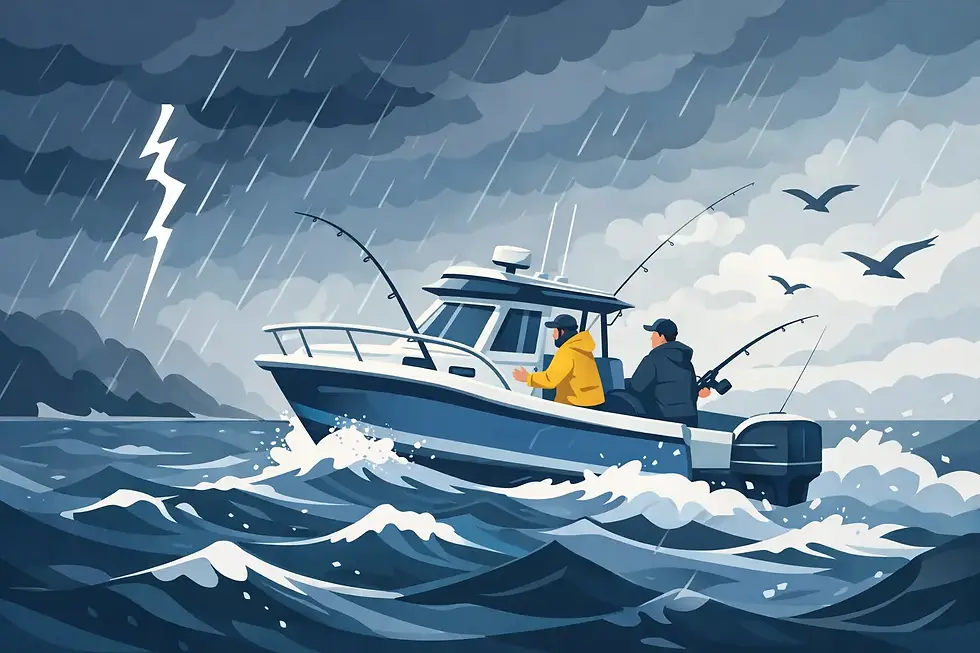
Every fishing trip depends on conditions, but offshore plans are usually affected more by weather than inshore plans.
A breezy day that is still fishable in the bay or marsh can be a problem in open Gulf water. Offshore trips need a wider weather window for safety and comfort. Inshore trips usually have more flexibility because marshes, bays, and protected shorelines offer places to fish out of the worst chop.
That does not mean inshore fishing is weather-proof. Wind, tides, water clarity, and seasonal changes all matter. It just means inshore often gives you more practical options when conditions are less than perfect.
Who should choose inshore fishing?
Inshore is a great fit for families, couples, first-timers, small groups, and experienced anglers who want an active trip without a long run offshore. It also makes sense for people who care about comfort, want a better shot at steady action, or simply do not want to spend a big part of the day running to deep water.
For guests around Bay St. Louis, this style of fishing also shows off what makes the local fishery special. Marsh edges, oyster structure, moving tide, and shallow-water strikes keep the trip fun from start to finish. That is a big reason many anglers who try it once end up wanting to go again.
Holy Schlitz Fishing Charters is built around exactly that kind of experience - straightforward, family-friendly, and focused on productive inshore water with species people actually get excited to catch.
So which one should you book?
If you want bigger water, longer runs, and the chance at larger offshore species, book offshore. If you want a more comfortable, accessible, and action-focused day with classic Gulf Coast fish, book inshore.
For a lot of people, especially beginners and vacationing families, inshore is the better first trip. It is easier to enjoy, easier to learn, and easier to fit into a real-world schedule. And for plenty of seasoned anglers, it is not a backup plan at all. It is the main event.
The best fishing trip is the one that fits your crew, your goals, and the kind of day you actually want to remember when the rods are back in the rack.


Comments