
Charter Fishing Checklist for a Better Trip
- Mike Schlitz
- Jun 3
- 5 min read

The difference between a smooth trip and a long, uncomfortable morning usually comes down to one thing - showing up prepared. A solid charter fishing checklist helps you avoid the common mistakes, like wearing the wrong shoes, forgetting sun protection, or bringing a cooler full of stuff you will never use. When your captain already has the boat, tackle, bait, and local know-how covered, your job gets a whole lot easier.
Why a charter fishing checklist matters
Private inshore trips are supposed to feel simple, and they should. But simple does not mean random. The better prepared you are, the more you can focus on what you came for - catching fish, enjoying the marsh, and spending time with your group instead of worrying about what you forgot in the truck.
This matters even more on the Mississippi Gulf Coast, where conditions can change fast. A cool early run can turn into a hot, bright morning by mid-day. One trip might mean casting to redfish along grass lines, while another has you working for trout over moving water. That is part of the fun, but it also means your clothing and personal items need to match a real day outside, not just a quick stop at the pier.
What your captain usually covers
One of the biggest reasons people book a guided trip is convenience. On many inshore charters, the captain provides the essentials: rods, reels, tackle, bait, safety gear, and the fishing license required for the trip. Water is often included too, and some charters offer fish cleaning as an added benefit.
That changes your packing list in a big way. You do not need to haul your garage to the dock. In most cases, bringing too much is more of a problem than bringing too little. Space is limited on any fishing boat, and extra bags, hard coolers, and loose gear can quickly get in the way.
Before your trip, confirm what is included so you know exactly what to leave at home. A good captain wants your day to be easy, not cluttered.
The basic charter fishing checklist
Start with the things that make the day comfortable. Lightweight clothes, non-marking shoes with good grip, polarized sunglasses, and a hat should be considered the core setup for almost any inshore trip. Add sunscreen, and you have covered the basics most people wish they had taken more seriously.
Clothing is where a lot of guests get it wrong. Cotton T-shirts and heavy clothes can feel fine at the dock but become miserable once the heat builds or spray starts blowing across the bow. Long-sleeve performance shirts and lightweight fishing pants or shorts usually work better. If the weather is cooler, bring a light rain jacket or windbreaker rather than a bulky sweatshirt.
A small personal bag is fine, but keep it tight. Your phone, wallet, sunscreen, sunglasses, any medication you may need, and maybe a snack are usually enough. If you are prone to motion sickness, take your medication before the trip, not after you start feeling bad. That is one of those details that can make or break your morning.
What to wear on an inshore charter
For bay and marsh fishing, comfort and sun protection matter more than fashion. You want clothes that breathe, dry fast, and move easily when you cast, reel, and step around the boat. Long sleeves may sound hotter, but they often keep you cooler than direct sun on bare skin for several hours.
Shoes deserve more attention than people give them. Flip-flops are easy, but they are not always the best choice on a wet deck. Closed-toe deck shoes or secure sandals with traction are usually a safer call. The goal is simple - you want to move confidently when the boat shifts or a fish makes a run around the bow.
Bring a hat that stays on in the wind. Polarized sunglasses are not just for comfort either. They cut glare, help you see better on the water, and make the day easier on your eyes. If you have ever squinted across open water for hours, you already know the value.
What to bring and what to leave behind
The best approach is to bring less than you think you need. A private charter is not a beach day, and it is not a camping trip. Too many personal items create clutter, and clutter gets old fast when lines are moving and fish are coming aboard.
Good items to bring include sunscreen, lip balm with SPF, sunglasses, a hat, a light rain layer, your phone, any personal medication, and a small snack if you want one. If you plan to keep fish and your captain allows it, you may want a cooler waiting in your vehicle for the ride home rather than trying to carry a large one onto the boat.
Leave behind anything fragile, expensive, or unnecessary. Large hard coolers, glass containers, oversized bags, and too much loose gear are usually more trouble than they are worth. Alcohol policies vary by charter, so ask ahead instead of assuming. The same goes for whether kids should bring extra clothes or whether your group should pack food.
Weather, kids, and other real-world details
A charter fishing checklist should always account for who is coming and what the forecast looks like. If you are bringing children, pack with comfort in mind. Extra sun protection, a backup shirt, simple snacks, and any child-specific medication are smart to have. Kids can have a great time on the water, but they also get hot, hungry, and tired faster than adults.
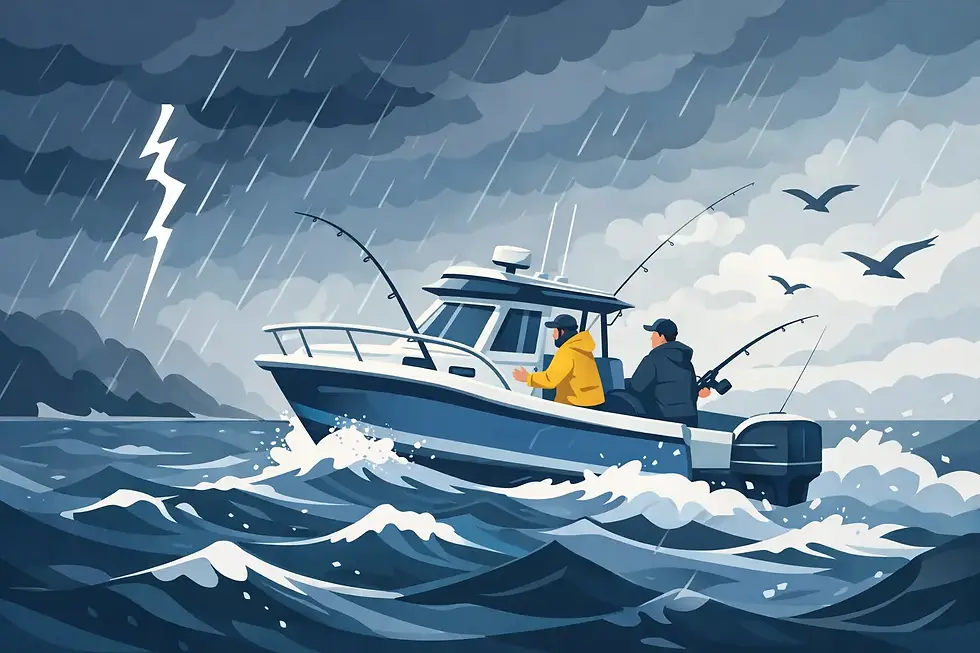
Weather deserves a practical mindset. Light rain does not always cancel a trip, and cloudy mornings can still fish great. Thunderstorms, heavy wind, and unsafe conditions are a different story. That is why it helps to think in layers instead of trying to guess the perfect outfit the night before.
The trade-off is simple. If you underpack for weather, you may spend the day uncomfortable. If you overpack, you crowd the boat and make things harder than they need to be. Aim for flexible, compact items that solve real problems.
A quick dockside checklist before you leave home
The night before your trip, take five minutes and run through the basics. Confirm the meeting time, location, and how long the trip will last. Check whether your captain is supplying licenses, tackle, bait, bottled water, and fish cleaning so you are not duplicating what is already handled.
Then look at your personal items. Clothes for the weather, proper shoes, sunglasses, hat, sunscreen, medication, phone, and a small bag. That is usually enough. If you are bringing kids or first-time anglers, give yourself a little extra time in the morning so nobody starts the day rushed.
If you booked with a service like Holy Schlitz Fishing Charters, much of the heavy lifting is already done for you. That is the whole point of a guided trip - less guesswork, more fishing.
What first-time charter guests often forget
Beginners often assume they need to bring a lot because they do not want to be the unprepared person in the group. In reality, first-timers usually do better when they keep it simple and ask questions ahead of time. The things most often forgotten are sunscreen, polarized sunglasses, and motion sickness medication.
The other common miss is mindset. Not every trip fishes the same, and that is normal. Tides shift, weather changes, and fish move. A good charter is still productive even when the plan changes, because the captain adjusts to the conditions. Showing up flexible makes the day better for everyone.
That is really what a good charter fishing checklist is about. Not bringing more stuff, but bringing the right stuff so you can enjoy the trip, stay comfortable, and be ready when that redfish thumps your line or a speckled trout starts shaking at the boat. Pack light, listen to your captain, and leave room for the fish.


Comments